
-
Ranking The 2023 Oscars: Best Original Score
I’ll be honest, music isn’t really my strong suit, even though I have played a synthesizer and some percussion instruments in the past – poorly, I might add. In my youth, instead of listening to pop music on the radio, I spent my time listening to movie scores. I owned quite a few CD’s at one point in time, all scores to movies like Lord of the Rings, Gladiator, Hannibal, and Sideways. They were scores that could elicit certain emotions in me by recalling to my memory specific scenes of a movie. So, when it comes to judging a movie based on their music there’s only really two criteria that I can judge it on – since I don’t know the technical ins and outs of this art – does it sound pleasant to me and does it work in the movie.
5. The Fabelmans – John Williams
I hate having to rank John Williams in last place here, since he’s been responsible for some of the most iconic cinematic sounds of the last 50 or so years. And maybe that’s the problem, his music of bemusement and wonder are a bit out dated – dinosaur-esque, passé. His style of music has been done, time and time, before and replicated to the point of becoming redundant. This is obviously not his best work, and I’m sad to say that his peak was at least 20 years ago, and he’s still stuck there.
4. Babylon – Justin Hurwitz
Babylon had to over come a lot of ‘shit’, specifically the opening scene that depicts and elephant evacuating it’s bowels onto some poor guy. And the music does help cleanse the pallet of debauchery and muck from your taste buds as it has some nice 20s style jazz that justifies the constant barrage of chaos and mayhem on the screen… at least most of the time. Then there’s stretches of the movie where it feels like I’m listening to the score for La La Land, and that’s not really a good thing as La La Land’s sounds were more fit for the 50s/60s style musicals. And this mix of styles of music are as jarring and distracting and grotesque as the movie itself.
3. Everything Everywhere All at Once – Son Lux
For as weird as this movie is, it’s score is just as weird. The movie traverses through several parallel universes, which allows for the score to explore each of these new worlds. We get some nice Asian inspired music that give off some Crouching Tiger Hidden Dragon vibes, for obvious reasons. But then that is mixed with some nice drone-y sci-fi music that’s full of sharp metal pitches and sporadic percussion. And then still we get a more traditional sound when we need it, strings and piano playing during the more emotional moments, trying to manipulate and pull at our hearts – which it does effectively. So unlike Babylon, this score is a hodgepodge of things that works incredibly well together.
2. All Quiet on the Western Front – Volker Bertelmann
There’s an epicene to the music in All Quiet on the Western Front. It feels a lot like Hans Zimmer as it mixes both that classical instrumentalism with a more experimental sound. It doesn’t have the extreme “BWONG” sounds that Zimmer’s been using for over the past decade, but it does have this tone that feels, sunken in yet overbearing- at least that’s the best way I can describe it. This desolate foreboding feeling, really enhances the atmosphere of being stuck in the trenches of WWI, on the side of the bad guys, nonetheless. We know that this movie isn’t going to have a happy ending, and the music helps us prepare for the battles and the bloodshed.
1. The Banshees of Inisherin – Carter Burwell
Speaking of foreboding,.. Banshees of Inisherin was probably my favorite film of last year. Two feuding friends on a desolate Irish Island. Carter Burwell’s score really encapsulates the haunting tone of the film. We get a heavy harp and xylophone centric score, which adds a bit of weirdness to this movie that is subtly weird – which I think we can classify self mutilation out of annoyance weird. And this type of depression, haunting, melancholic is kinda my jam. I can see myself putting this soundtrack on in the background as I write. It’s like a little music box filled with emotion and sadness.
-
Ranking The 2023 Oscars: Best Sound
So as I complete the list of this year’s Oscar contenders, I’m going to rank the nominees in each of their individual categories. Starting this frivolous expedition is Best Sound.
Now I remember back in the day when there were two “sound” categories; Best Sound Design and Best Sound Mixing, both of which are completely different jobs. But it’s all audio and film is a visual medium, so let’s just throw them sound men together in one batch.
Going in reverse order:
5. The Batman
(Stuart Wilson, William Files, Douglas Murray and Andy Nelson)I wasn’t the biggest fan of The Batman as an overall experience. But the sound design was probably one of it’s better aspects. Good sound needs to be immersive, and it shouldn’t call attention to itself. There’s nothing flashy going on here, just solid work from the sound team.
4. Avatar: The Way of Water
(Julian Howarth, Gwendolyn Yates Whittle, Dick Bernstein, Christopher Boyes, Gary Summers and Michael Hedges)Avatar is a garbage movie, but a bad script doesn’t take away from the achievements of those that work behind the scenes. And with Avatar 2, you had a whole team that had to create sounds that felt authentic to a foreign planet. And the sound effects here does bring the blue planet to life… only if the script had the same amount of life in it.
3. Elvis
(David Lee, Wayne Pashley, Andy Nelson and Michael Keller)Musical… Elvis… Baz Luhrmann… Remember earlier when I said Sound Designs shouldn’t call attention to themselves. Well Baz is a gaudy sort of guy, and the sound in Elvis is just as gaudy as it’s visuals… but that’s not necessarily a bad thing. You have to consider the director’s style and the subject matter. The only downside here is that the sound team couldn’t fix Tom Hank’s bad accent.
2. All Quiet on the Western Front
(Viktor Prášil, Frank Kruse, Markus Stemler, Lars Ginzel and Stefan Korte)Ever since Saving Private Ryan, there’s just been something special about war movies and their sounds. You can almost feel the bullets wheezing by you or taste the dirt as it blows up, covering the screen. You feel like you’re in the muck and the blood of the trenches. But where this rendition of Western Front steps up its game is in the quiet scenes. The slight snow falling on frozen branches. The quiet just before hell breaks loose. It’s effective and unnerving.
1. Top Gun: Maverick
(Mark Weingarten, James H. Mather, Al Nelson, Chris Burdon and Mark Taylor)Everyone that goes to film school learns that in the original Top Gun they used a mix of animal roars to create the sound of the jet engines, which is a cool story. I’m not sure if they continued that tradition with Maverick, but the jets hear really sound spectacular. Even the way the dialogue is leveled while we’re in these cockpits is impressive. I mean the first 15 minutes there’s not a ton of dialogue, but the mix of audio and visuals do make you cling to the edge of you seat.
-
Skinamarink (2022)
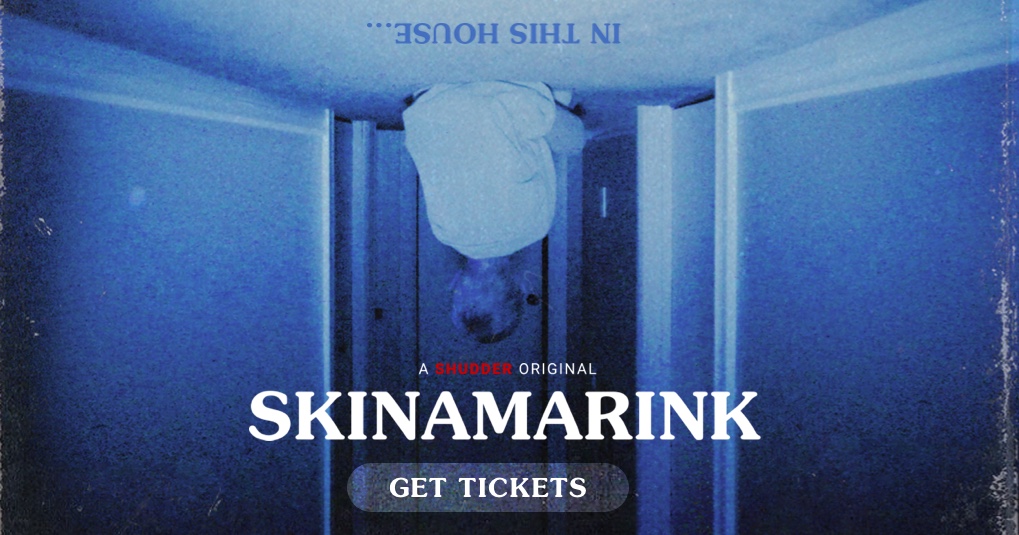
Let’s talk about the most talked about movie of the year, Skinamarink.
So what does skinamarink actually mean. It is a gibberish word that’s used in a pleasantly annoying children’s song. And surprisingly it is an appropriate and more than likely intentional title for this movie. Because the movie is gibberish, in more ways than one, and it’s from more or less the point of view of children.
Skinamrink is an experimental horror flick that has polarized audiences. You either love it or you hate it, sadly I fall in the latter camp. The plot, if you can call it that, follows two children who wake up in the middle of the night to realize their parents are not home. Vanished. Gone. The kids try to make the most of the situation by dragging their legos in front of the television. But weird things start happening doors disappear, leaving no escape for the kids, phones turn into toys, even the toilet puffs away into thin air. All the while a demonic voice calls out to the kids telling them to do bad things.
I will say, my synopsis of the movie, is about 60% more exciting than the actual movie which takes it time at a languid pace. It spends its time lingering on strange camera angles. We get close ups of old cartoons on antique tv sets. We spend time looking at all the nooks and crannies of the house. We get look stretches of peering into complete darkness, waiting for something to pop out and scare us… but nothing ever comes.
This movie has no intention of telling a traditional narrative. It is after all, experimental. I’ve seen people compare it to the likes of The Blaire Witch Project, which the only comparison I see that is that the movie is polarizing and ends on an ambiguous note. Others have compared it to David Lynch’s Eraserhead. I don’t understand that one, as Eraserhead does have an overarching theme to its weird images. Skinamarink on the other hand is more one note in theme and tone. If I were to compare it to anything, I would suggest that it’s more like the experimental films of Stan Brakhage or Hollis Frampton, who both made short films that are described as mood pieces. They both used swaths of colors in motion or filmed everyday objects in an obscure light to create a sense of atmosphere. Their films would usually last a few minutes. Skinamarink lasts an hour and 40.
That being said, Skinamarink does overstay its welcome. It would have been better serviced as a short film, or even a series of shorts. The thread that tries to hold the narrative together is just too thin. But like the short films of Brakhage and Frampton, it is more of a mood piece. I don’t think director, Kyle Edward Ball, had any intention on making anything other than a mood piece. He wanted to find the horror from behind the eyes of a child. And granted, when I was a kid, I remember my mom driving me to my grandmother’s house in the dark. I would look out the window at the naked tree branches and see faces and monsters in them. But I if I were to make a feature length movie that had nothing but tree branches in it, it wouldn’t be too entertaining.
But I will say that the movie is a triumph of good sound design. The scratches in the audio, the different pitches in the sparse dialogue, and the jump scares from bumps and bangs off camera tries to hold the movie together. The sound really sells what limited scares there are in the film.
I read one negative review that called this a “creepypasta”. This term was new to me, and to my disappointment it has nothing to do with haunted noodles. Instead creepypasta is catch-all term for any horror content posted onto the Internet. Short horror films and stories that are told in TikToks or YouTube videos. And I think I would have enjoyed Skinamarink a lot more if it were in these tiny spooky pastas form, instead of waiting 100 minutes for the creature under my bed to never show up.


